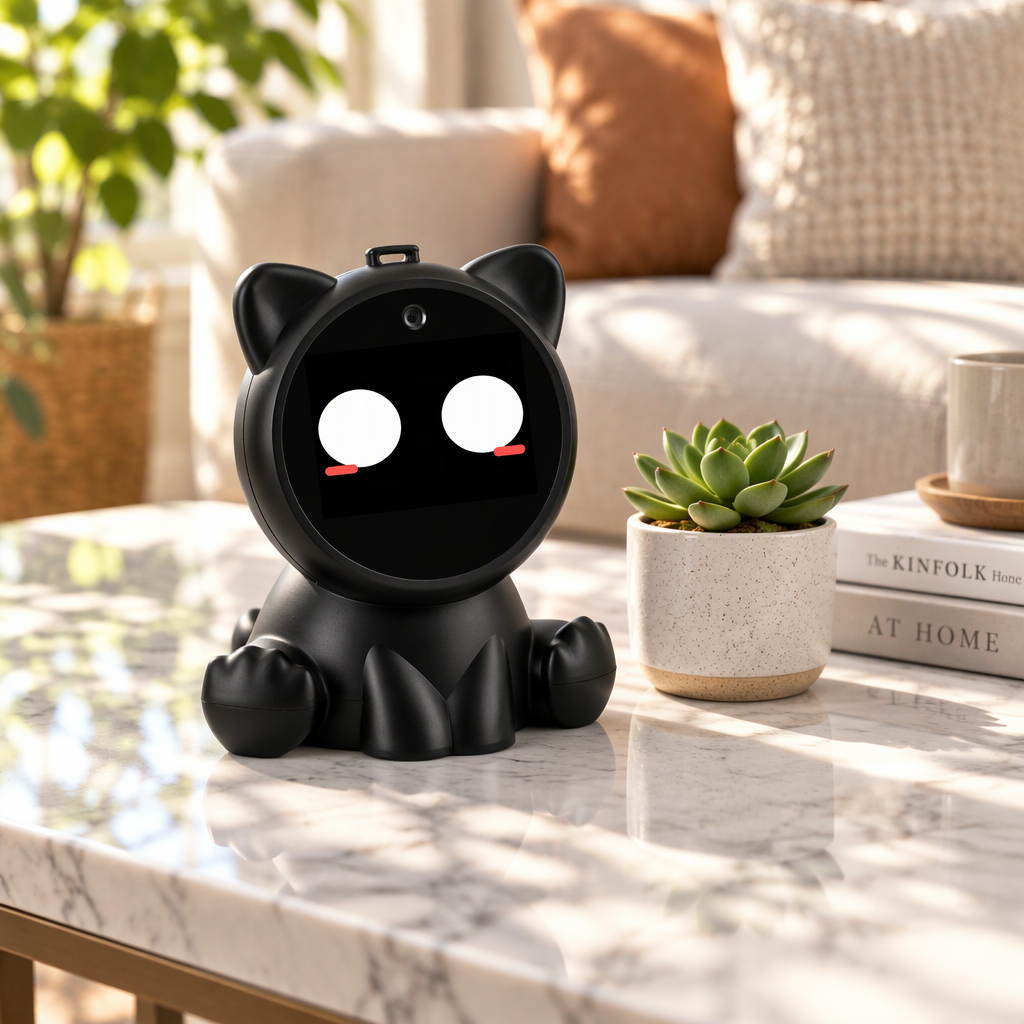
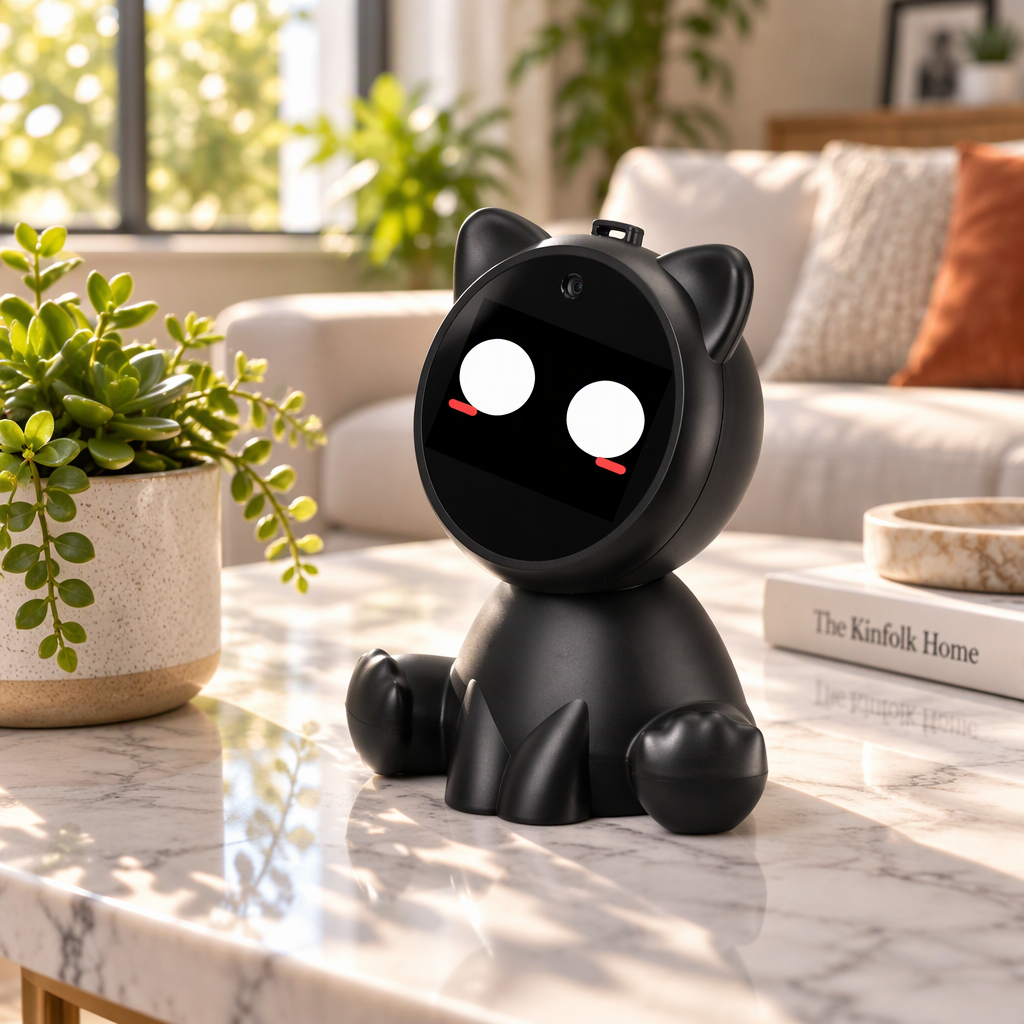
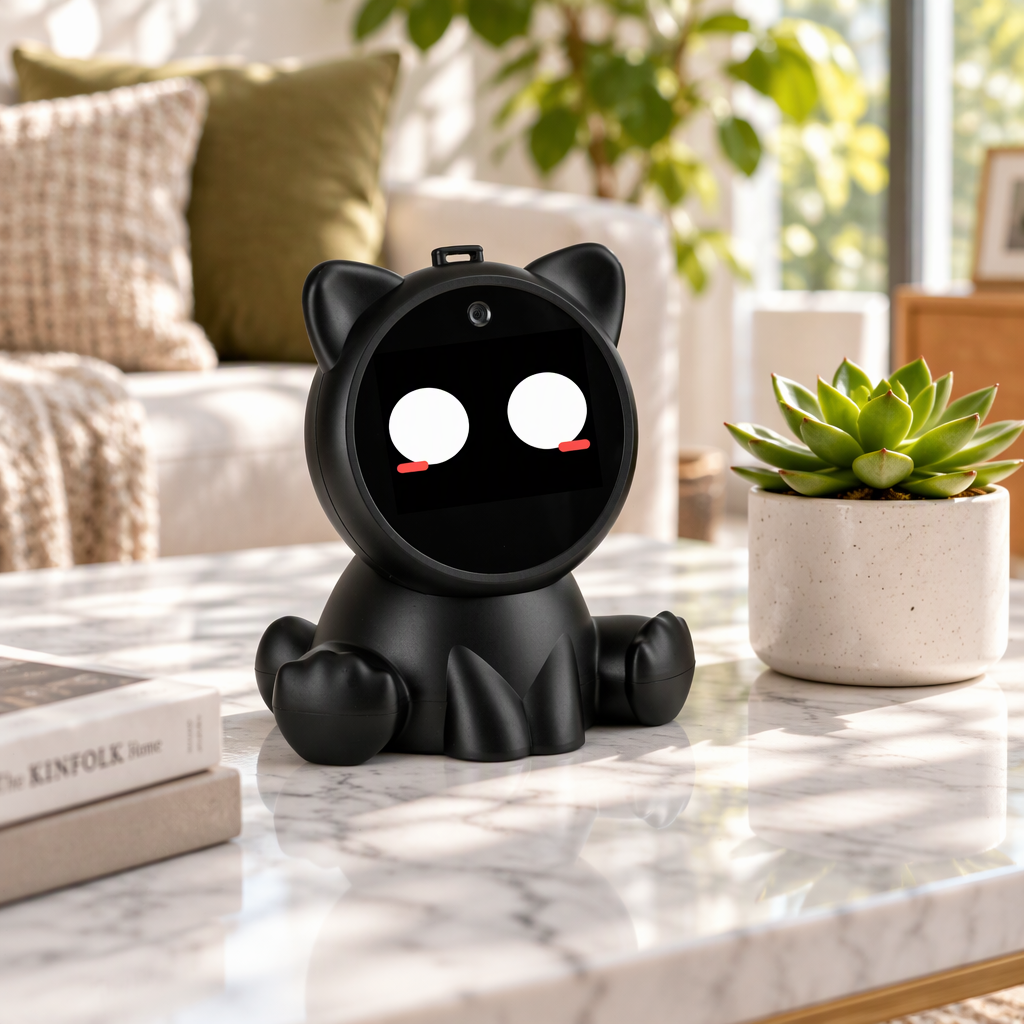
Virtual Pet That Talks Back T23 AI Digital Cat Robot Voice Chat Camera Recognition Play for Kids at Home
- Vision Camera Facial Tracking
- Reinforced Conversational Loops
- Low-Latency Wake Engine
Explore flagship intelligent hardware running advanced edge inference, vision-language behavioral adaptation, and low-power sensory feedback loops ready for global distribution.
In high-precision consumer electronics and intelligent companionship toys, traditional scripted heuristics have reached their architectural ceiling. As global toy brands, educational publishing houses, and consumer electronics distributors transition toward intelligent agents, Shenzhen MDT Technology Co., Ltd. (Microducktoys) leads the integration of physical Reinforcement Learning (RL) training methodologies within embedded low-power systems.
The term "microduck rl training" designates our specialized pipeline of algorithmic fine-tuning, sim-to-real transfer, and edge policy quantization tailored specifically for micro-actuators, low-cost optical cameras, and compact microphone arrays. Rather than deploying static state-machines, our engineering division implements constrained Markov Decision Processes (MDP) on silicon, enabling companion pets such as the T23 AI digital cat series to adapt their dynamic behavioral trees, gaze mechanics, and emotional response envelopes according to real-time physical interaction.
A primary bottleneck in manufacturing intelligent robotic toys lies in actuator degradation and real-world variance. Microduck solves this through synthetic simulation engines. In our Shenzhen R&D facility, robotic physical models undergo millions of virtual reinforcement learning iterations across distributed physics simulations prior to mold tooling injection and SMT validation.
By simulating torque limitations, friction coefficients across synthetic fur textiles, and sensor latency, our RL agents train within domain-randomized physics environments. When policies are transferred via flashing firmware to our production units—whether it is the Loona-class pet or the T23 desktop companion—the toy exhibits zero physical hesitation, smooth motor trajectory, and immediate tactile adaptation when handled by children or adults.
To assist technical procurement teams and B2B systems architects, the following engineering matrix outlines the embedded silicon tiers, RL model classes, and sensory arrays deployed across Microduck's OEM/ODM manufacturing lines:
| Hardware Class | Compute Platform | RL / AI Paradigm | Sensory Stack | Target B2B Application |
|---|---|---|---|---|
| Tier-1: Edge Companion (T23 Series) | Dual-Core RISC-V + NPU (0.5 TOPS) | Quantized Actor-Critic Policy / Local Acoustic RL | Wide-angle CMOS, Dual MEMS, Capacitive Touch | Interactive Desk Pets, Screen-free Voice Companions |
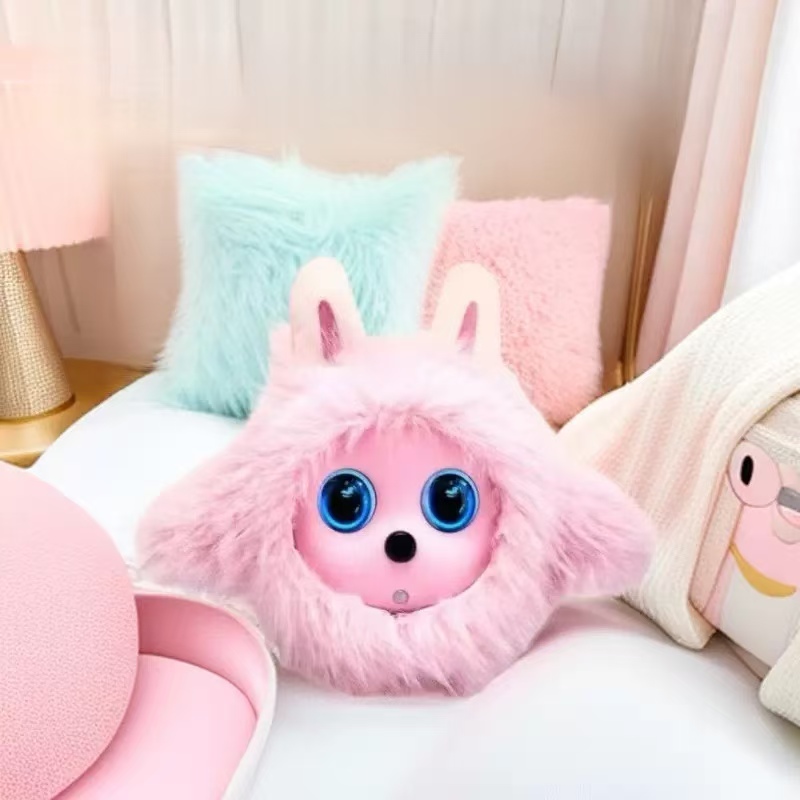
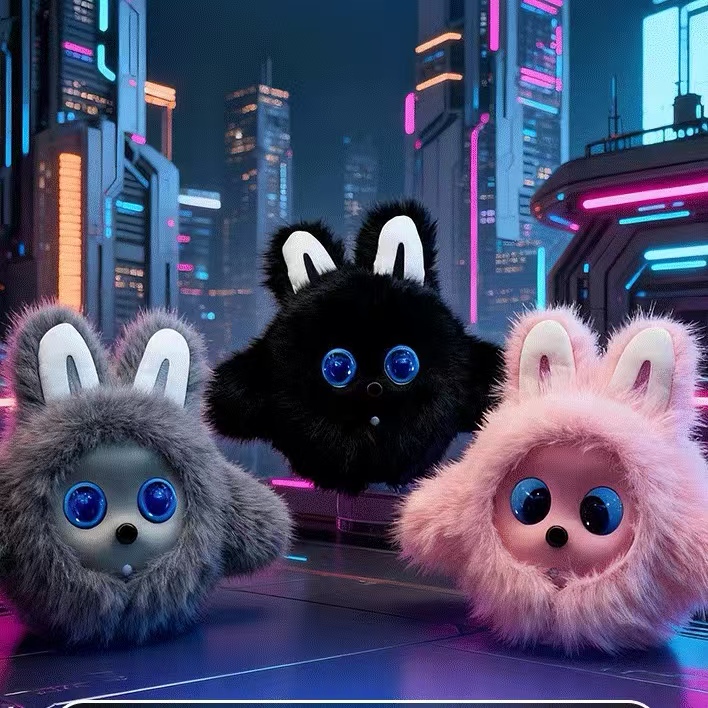
| Tier-2: Expressive Cuddly (Plush AI) | Wi-Fi 6 / BLE 5.3 + Ultra-Low Low-Power DSP | RLHF Guardrailed Dialogue & Cloud LLM Streaming | IPS Eye Displays, 3000mAh Li-Po, Haptic Feedback | Bedtime Education, STEAM Emotional Plush Toys |
| Tier-3: Kinematic Quadruped (Loona Type) | Quad-Core Cortex-A53 + 2.0 TOPS Edge NPU | PPO (Proximal Policy Optimization) Locomotion | 3D ToF Camera, 6-Axis IMU, Wheel-Leg Servos | High-Tier Consumer Electronics, Tech Flagships |
| Tier-4: Kinetic Game System (Magnetic Pursuit) | 2.4GHz Spread-Spectrum RF Microcontroller | Behavioral Trajectory Tracking & State Automation | Magnetic Hall Sensors, Infrared Distance Proximity | Competitive Family Toys, High-Speed Pursuit Games |
Conversational smart toys require uncompromising ethical and content guardrails. While generic Large Language Models (LLMs) can generate unverified or unpredictable tokens, Microduck applies rigorous Reinforcement Learning from Human Feedback (RLHF) on top of our language distribution engines. Whether integrating ChatGPT endpoints, DeepSeek architectures, or localized multilingual knowledge bases covering 40 languages, our conversational filters enforce absolute compliance with global child safety standards.
The dialogue engine analyzes incoming audio for sentiment, emotional distress, or inappropriate queries, instantly pivoting the model output toward pedagogically sound, encouraging, and informative narrative branches. Furthermore, models supporting parental review storage partition all user data into encrypted local memory partitions, satisfying both international auditors and security-conscious retail distribution networks.
Operating as Microducktoys, our integrated manufacturing, R&D, and global trade operations provide unmatched supply chain reliability, technological agility, and compliance transparency.
From initial industrial design, 3D CAD modeling, custom tooling, and silicon layout to plush pattern stitching and acoustic chamber calibration, Microduck manages the full lifecycle under one roof, shortening prototyping timelines from months to weeks.
Our operational capabilities, labor integrity, testing labs, and assembly lines have been independently verified on-site by TÜV Rheinland. We eliminate the compliance blind spots typically encountered when dealing with unvetted intermediaries.
Instead of managing disparate vendors for electronic robotics, mechanical RC cars, and plush textile novelties, distributors leverage our consolidated supply chain. One purchase agreement, unified quality control checkpoints, and streamlined container loading.
Our production units undergo full CE, EN71, FCC, CPSIA, and RoHS compatibility testing. We possess complete MSDS and UN38.3 test records for all rechargeable lithium battery packs, ensuring frictionless customs clearance across the EU, the Americas, and the Gulf.
Smart toys often fail when exported to non-English speaking territories due to poor phoneme recognition. Microduck maintains native speech models and linguistic corpora covering 40 languages, enabling private-label partners to capture untapped market share instantly.
We respect the retail validation process. Importers can initiate their test catalog with sample units from 1 piece, moving directly into custom-branded packaging runs starting in small batches before scaling into high-volume sea container shipments.
A strategic analysis of how embodied AI, TinyML microcontrollers, and shifting global retail mandates are redefining smart companion purchasing policies worldwide.
For the past three years, smart toys heavily relied on cloud-tethered API calls to Large Language Models. While functional, this paradigm created two unsustainable liabilities for international distributors: perpetual cloud token subscription bills and unpredictable voice response latencies that ruined interactive engagement for young children. The emerging frontier in smart toy development is the hybrid edge-cloud paradigm.
By implementing specialized quantized models (such as sub-1B parameter models distilled via Reinforcement Learning) directly into 0.5 to 2.0 TOPS edge processors, smart toys can execute immediate wake-word verification, acoustic emotion classification, and local physical reactive behaviors with sub-100 millisecond latency. The cloud is only invoked for open-domain encyclopedia queries and long-form narrative generation. Institutional procurement directors are prioritizing suppliers capable of demonstrating this hybrid stack to preserve operating margins and guarantee high product longevity.
Static blinking LEDs and pre-recorded audio chips no longer satisfy consumer expectations in high-tier retail. Modern buyers demand emotional resonance. In the T23 digital cat, Loona pet dog, and our LCD-integrated plush products, Microduck engineers continuous emotional vectors calibrated through reinforcement learning policies.
Sensors measure the frequency of touch, proximity to the owner's face, ambient light transitions, and vocal cadence. The toy's synthetic personality parameter vector updates organically: continuous neglect yields shy, withdrawn behaviors and downcast LCD gaze animations, whereas active engagement stimulates playful chirping, tail wagging, and interactive rhythm challenges. This emotional stickiness exponentially increases monthly active engagement, minimizing customer return rates for online and retail channels alike.
Procuring smart toys is no longer merely a matter of electronic safety certificates (such as low-voltage and toy safety directives). With the formal enforcement of the European Union Artificial Intelligence Act and updated COPPA directives in the United States, toys incorporating biometric recognition (voice, facial images, emotional profiling) face stringent compliance audits.
Distributors must ensure their manufacturing partners implement zero biometric harvesting policies. Microduck’s hardware designs execute all visual identification and emotional tracking ephemerally in RAM without writing raw image frames to permanent flash memory. Furthermore, models featuring parent review functionality utilize zero-knowledge local Wi-Fi transmission or fully encrypted cloud vaults where decryption keys reside solely on the parent's mobile smartphone. Verifying this regulatory architecture during the procurement stage prevents catastrophic inventory seizures at destination ports.
Global environmental mandates, notably within the European Union, are compelling consumer toy brands to transition toward repairable architectures and sustainable battery assemblies. Smart toys with permanently glued, non-removable lithium pouches are facing escalating disposal fees and consumer resistance. Future-proof procurement agreements specify modular internal chassis, UL-certified removable rechargeable cells (such as standard 18650 or quick-disconnect 3000mAh packs), and flame-retardant, non-toxic ABS/silicone shells that comply with emerging circular economy mandates.
Direct, unedited technical and contractual answers addressing the most common concerns raised by corporate purchasing directors and distributor networks.
"Microduck RL Training" refers to our proprietary engineering methodology where consumer robotic behaviors, tactile sensor handling, and voice dialogue boundaries are refined using Reinforcement Learning (RL) simulation environments prior to commercial mass production. Instead of hand-coding thousands of fragile mechanical rules, we train neural policies on simulated robot kinematics and speech interaction data. This results in far more natural movement, smooth motor acceleration, zero jitter, and safe, child-appropriate language responses that adapt seamlessly to real-world user interactions.
For evaluation and sample validation, our stock inventory can be dispatched starting at 1 piece. For minor OEM customization—including custom silk-screened logos, custom English or multi-language retail packaging, and customized software boot screens—the MOQ starts at 500 to 1,000 units depending on the model. For comprehensive ODM development, such as bespoke plush animal skins, custom plastic injection molds, or dedicated proprietary firmware personas, the project-based MOQ is typically 3,000 units.
Privacy by design is strictly applied across all Microduck voice-enabled products. Our hardware uses edge-based wake-word detection, meaning the microphone does not stream ambient audio until intentionally triggered. Furthermore, voice data streams directly over TLS 1.3 encrypted sockets to authorized servers and is discarded immediately after tokenization. No child vocal profiles or raw audio samples are stored for model training without explicit parental consent via an audited companion application. Our products are fully architected to satisfy US COPPA and EU GDPR-K standards.
Our products are CE certified (EMC, LVD, RED directives). Additionally, our factory maintains test reports for EN71 (Parts 1, 2, and 3), ASTM F963, FCC Part 15B, CPSIA, and RoHS. For models containing integrated lithium-polymer batteries (such as our 3000mAh rechargeable plush and pet units), we supply certified UN38.3 testing summaries, MSDS documentation, and drop-test packaging compliance certificates required for air and ocean freight carriers.
We offer comprehensive trade flexibility including FOB (Shenzhen/Hong Kong), CIF, CFR, EXW, FCA, CPT, CIP, DDP, and DDU, alongside international express courier options for fast sampling. Accepted financial settlement channels encompass T/T (Telegraphic Transfer), L/C at sight, D/P, D/A, Credit Card, PayPal, Western Union, and Escrow services across major global reserve currencies: USD, EUR, GBP, JPY, CAD, AUD, HKD, CHF, and CNY.
Partner directly with Shenzhen MDT Technology Co., Ltd. for verified manufacturing excellence, advanced reinforcement learning integration, and high-margin retail smart toys.